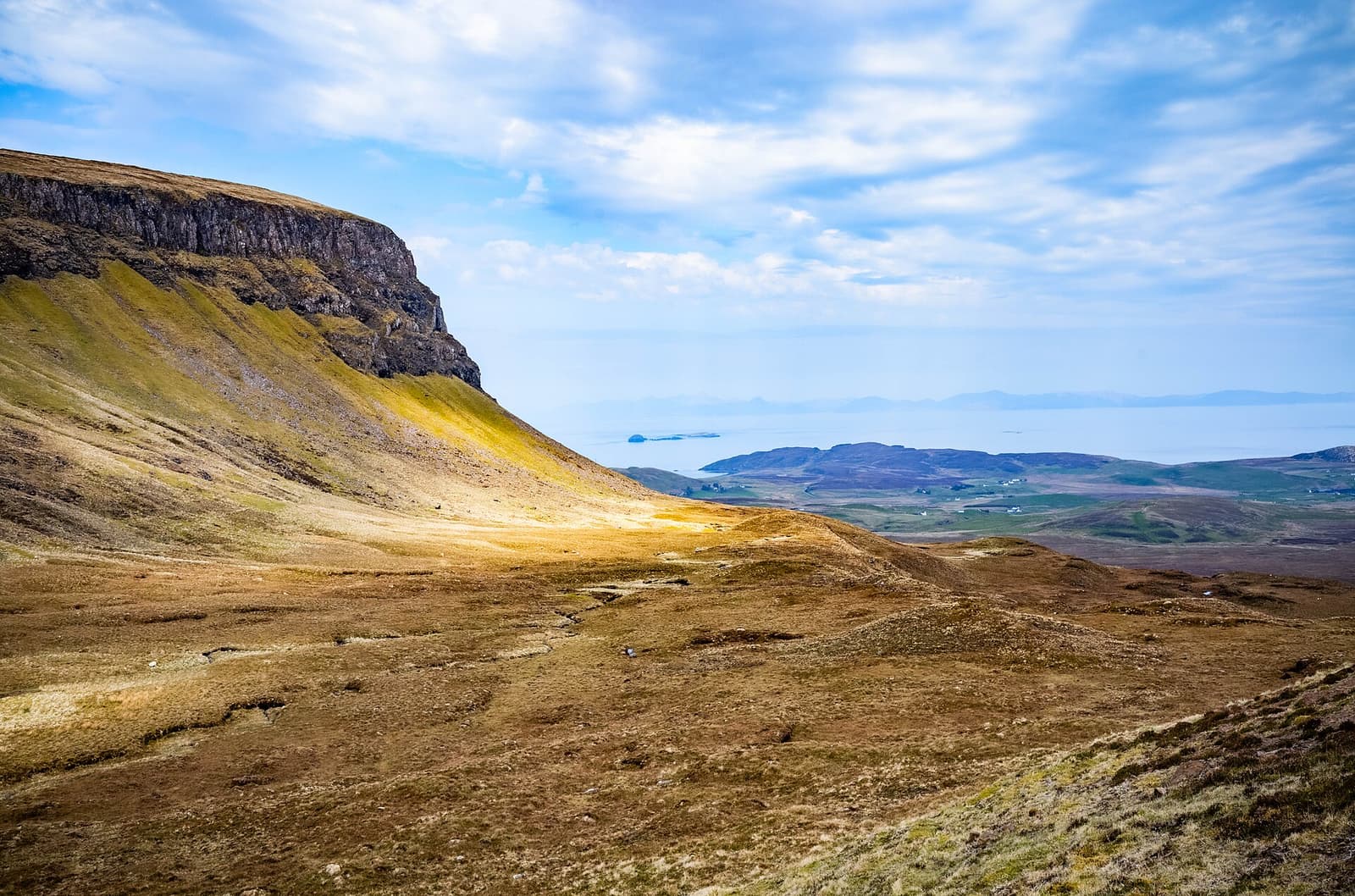
Arriving by air
Scotland has four main international airports. Edinburgh (EDI) is the busiest, with the widest range of European and long-haul routes; a tram and express buses reach the city centre in about 30 minutes. Glasgow (GLA) is about 25 minutes from the city by express bus. Aberdeen (ABZ) serves the north-east, and Inverness (INV) puts you in the Highlands straight away, with connections through London, Amsterdam and other hubs. Glasgow Prestwick (PIK), on the Ayrshire coast, has a few low-cost routes and its own railway station.
Many long-haul visitors fly to London, Amsterdam, Dublin or Paris and connect. If you arrive in London, the train north is often as quick door to door as a connecting flight, and far more pleasant.
Arriving by train
- London to Edinburgh takes roughly 4½ hours on the East Coast Main Line from King’s Cross, with trains about every half hour; the last stretch runs along the Northumberland and Berwickshire coast.
- London to Glasgow takes about 4½–5 hours on the West Coast Main Line from Euston.
- The Caledonian Sleeper runs overnight from London Euston, six nights a week, to Edinburgh and Glasgow and on to Fort William, Inverness and Aberdeen. Waking up on Rannoch Moor is one of the great railway experiences in Europe; cabins need booking well ahead.
Advance tickets, sold up to around twelve weeks ahead, are far cheaper than buying on the day.
Arriving by road or sea
From England, the M6/A74(M) leads to Glasgow and the A1 or A68 to Edinburgh; allow seven to eight hours’ driving from London. Long-distance coaches (National Express, FlixBus, megabus) are the cheapest way north. Car ferries from Northern Ireland sail from Belfast and Larne to Cairnryan in south-west Scotland. There is currently no direct passenger ferry between Scotland and mainland Europe — the nearest is the overnight Amsterdam (IJmuiden) to Newcastle service, about two hours’ drive from Edinburgh.
Getting around by train
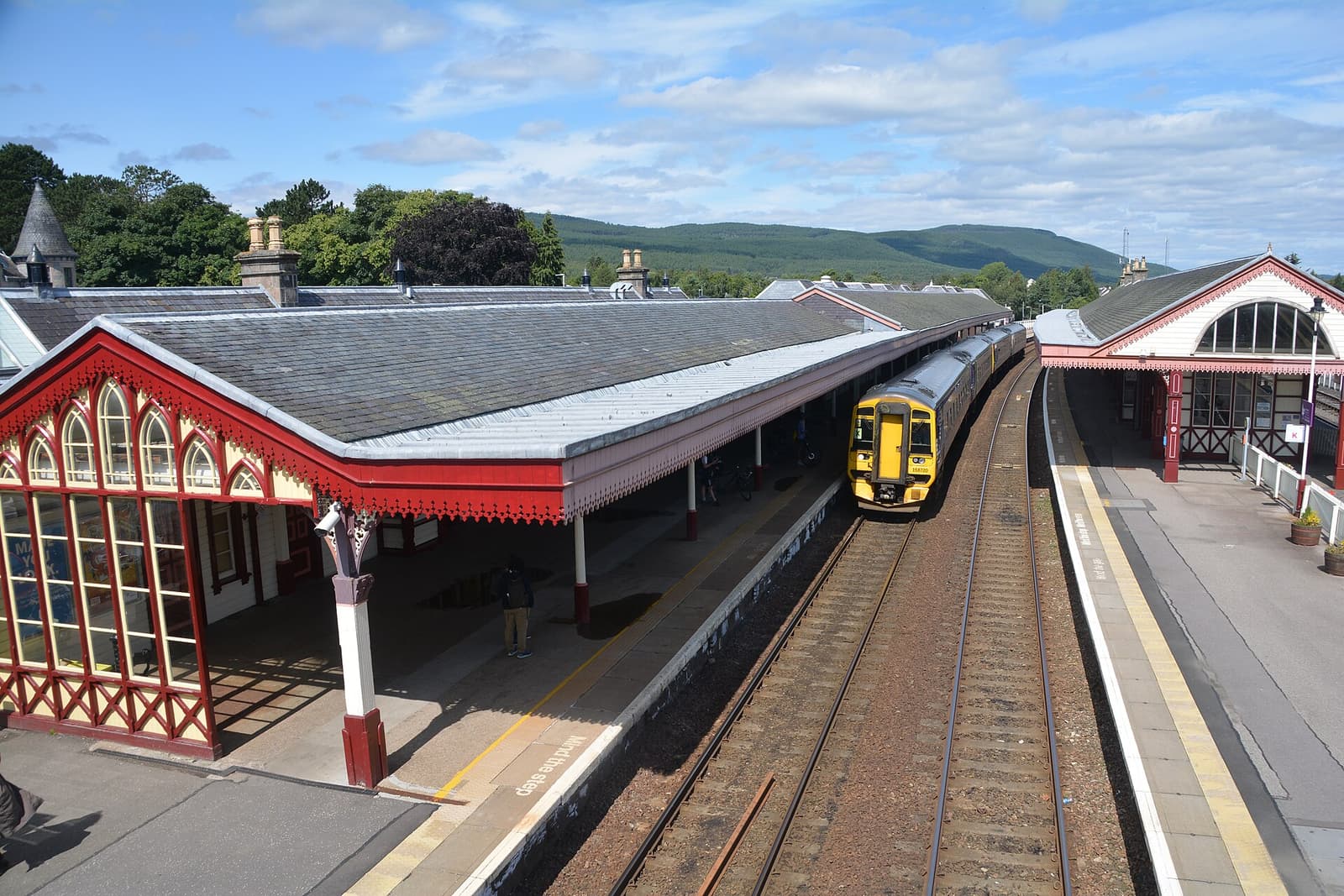
ScotRail runs almost all trains within Scotland. The network is dense in the Central Belt and thins to a handful of long, beautiful single-track lines in the Highlands. Edinburgh and Glasgow are linked by fast trains every 15 minutes or so (about 50 minutes).
| Journey | Typical time | Notes |
|---|---|---|
| Edinburgh – Glasgow | 50 min | Every 15 minutes at busy times; several routes. |
| Edinburgh – Stirling | 45–50 min | Glasgow – Stirling takes about 30–40 minutes. |
| Edinburgh – Inverness | 3½ hours | The Highland Main Line through Pitlochry and Aviemore. |
| Edinburgh – Aberdeen | 2½ hours | Over the Forth Bridge and along the east coast. |
| Glasgow – Fort William – Mallaig | 3¾ hours / 5¼ hours | The West Highland Line: Loch Lomond, Rannoch Moor, the Glenfinnan Viaduct. A few trains a day. |
| Glasgow – Oban | 3 hours | The other arm of the West Highland Line, for the Mull ferry. |
| Inverness – Kyle of Lochalsh | 2¾ hours | The Kyle line: coast to coast to the edge of Skye. |
| Inverness – Thurso / Wick | 4–4½ hours | The Far North Line, for the Orkney ferry at Scrabster. |
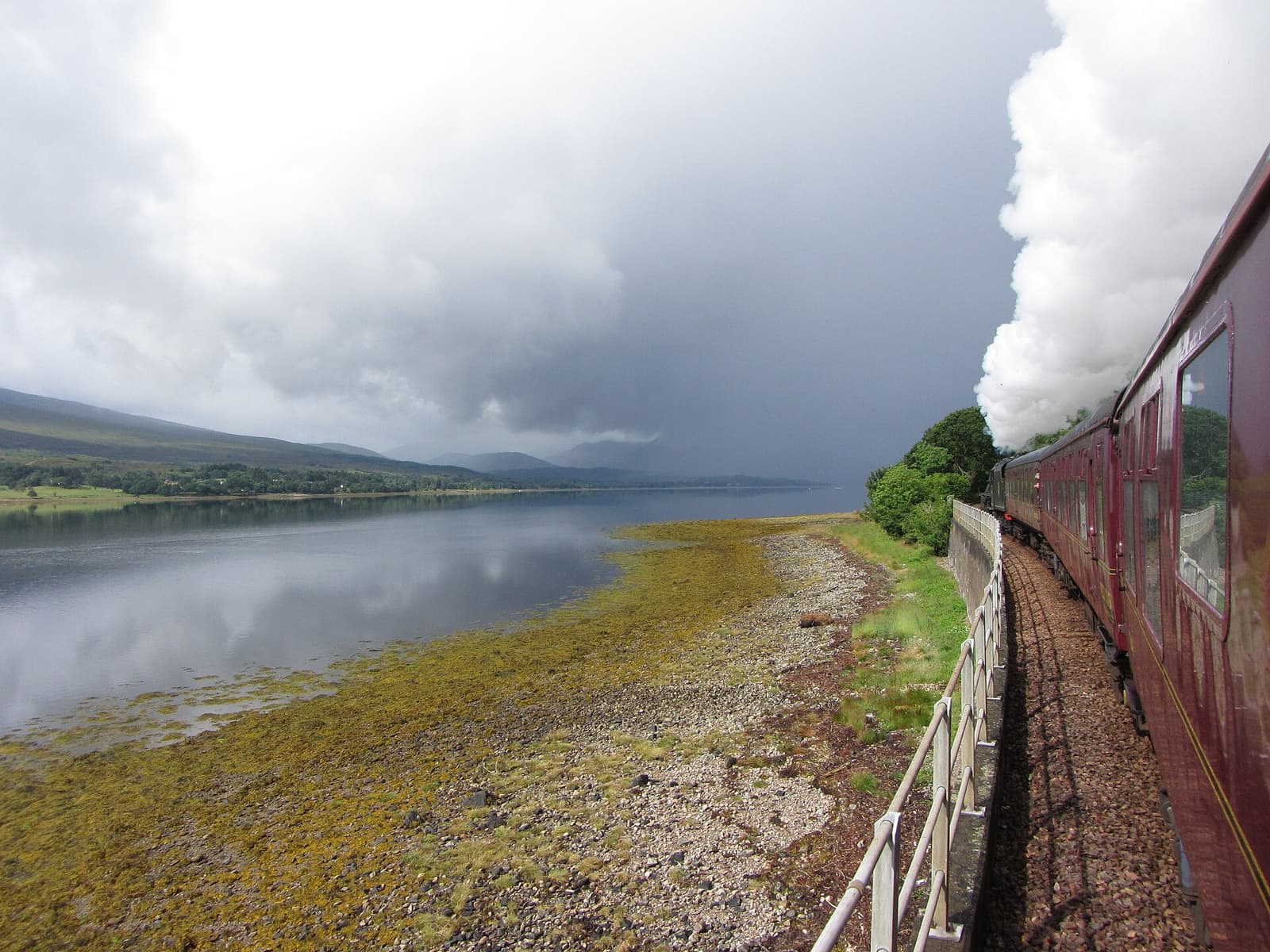
Scenic lines. The West Highland Line and the Kyle line are destinations in themselves. Sit on the left leaving Glasgow for Loch Lomond, and reserve seats in summer — trains have only a few carriages. The seasonal Jacobite steam train between Fort William and Mallaig is a separate, privately run service that sells out early; ordinary ScotRail trains cross the same viaduct for a fraction of the fare.
Passes. The Spirit of Scotland Travelpass gives unlimited travel on trains and many coaches and ferries for 4 days out of 8 or 8 days out of 15; the Highland Rover and Central Scotland Rover cover smaller areas. They pay for themselves on two or three long journeys — check current prices and conditions with ScotRail. Railcards giving a third off are worthwhile for longer stays.
Coaches and buses
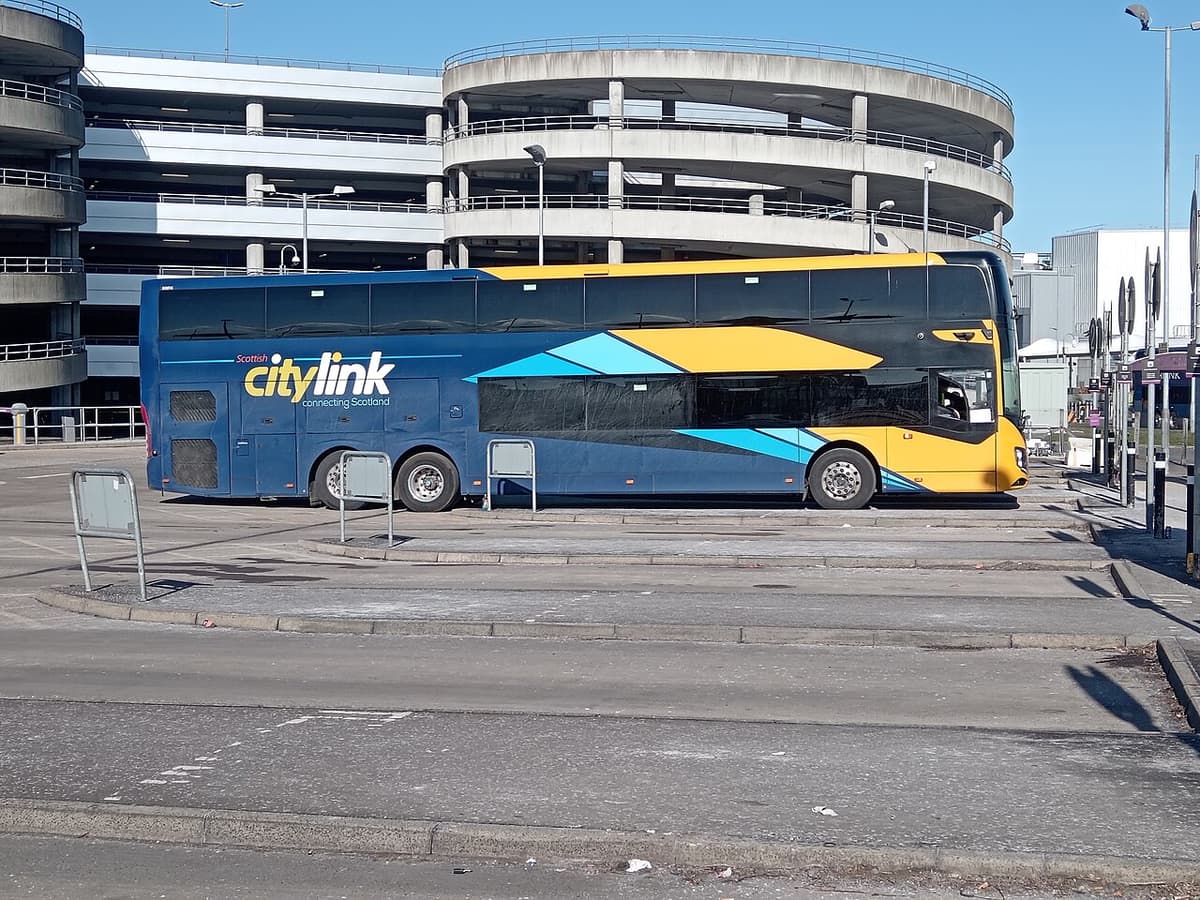
Scottish Citylink coaches go where the railway does not: Glasgow to Glencoe, Fort William and Skye; Inverness to Skye and Ullapool; Glasgow to Oban and Campbeltown; plus frequent Edinburgh–Glasgow and express services to Inverness and Aberdeen. Seats can and should be reserved in summer, and Explorer Passes give several days of unlimited travel. Megabus and Ember (electric coaches) compete on the main intercity routes. Local buses in the Highlands and islands are sparse, often built around school times, and may not run on Sundays.
Ferries
Caledonian MacBrayne (CalMac) runs nearly all services to the west-coast islands; NorthLink Ferries sails to Orkney and Shetland, and Pentland Ferries runs a second Orkney route.
| Route | Crossing | For |
|---|---|---|
| Oban – Craignure | about 50 min | Mull (then Fionnphort – Iona, 10 min, foot passengers) |
| Mallaig – Armadale | about 30–45 min | Skye, as an alternative to the bridge |
| Uig (Skye) – Tarbert / Lochmaddy | about 1¾ hours | Harris and North Uist |
| Ullapool – Stornoway | about 2½–2¾ hours | Lewis |
| Ardrossan or Troon – Brodick | about 1 hour | Arran |
| Scrabster – Stromness | about 1½ hours | Orkney (NorthLink) |
| Gills Bay – St Margaret’s Hope | about 1 hour | Orkney (Pentland Ferries) |
| Aberdeen – Kirkwall – Lerwick | 6 hours / overnight | Orkney and Shetland (NorthLink) |
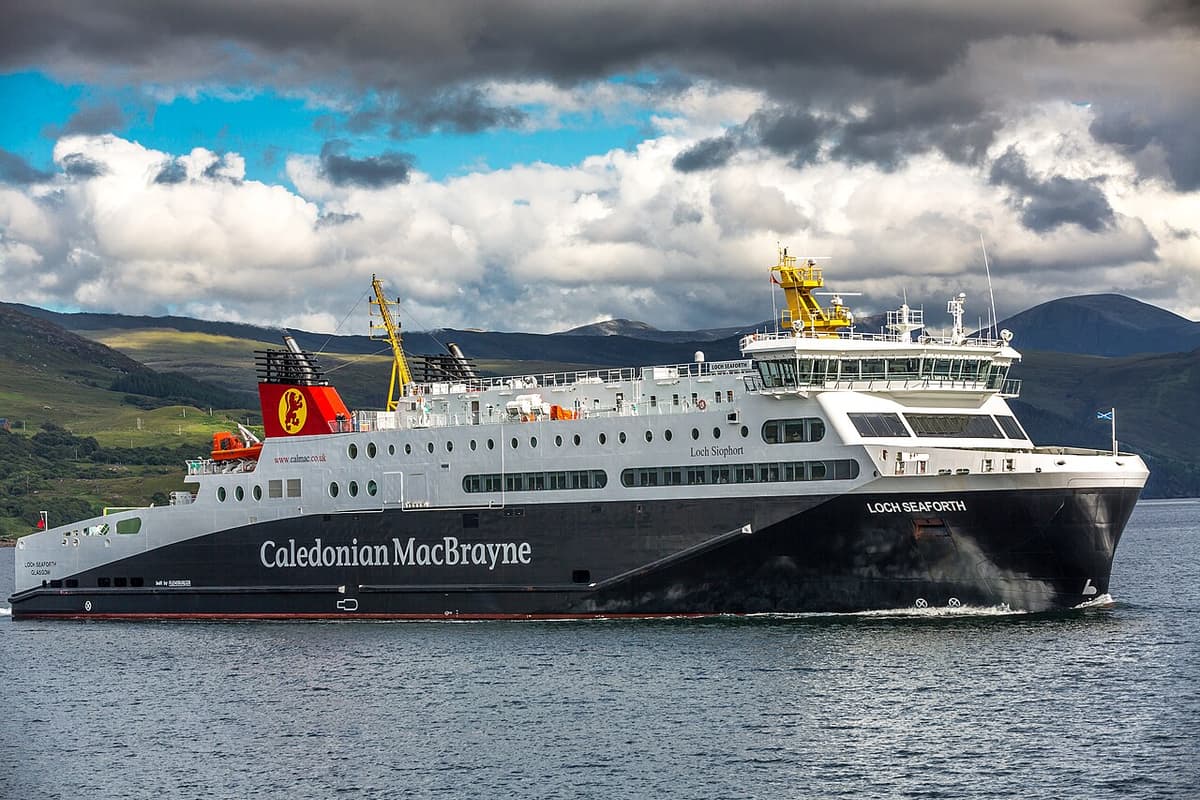
Book ahead, and stay flexible. Foot passengers can usually turn up and go, but vehicle space on the popular routes sells out weeks ahead in summer. The west-coast fleet is ageing and has suffered repeated breakdowns and delays to new ships in recent years, on top of ordinary weather cancellations; routes are sometimes moved to a different port (the Arran service has switched between Ardrossan and Troon, for example). Check the operator’s service status the day before and on the morning of travel, avoid planning a tight connection to a flight, and keep one loose day in any island itinerary. Island-hopping “Hopscotch” tickets from CalMac bundle several crossings.
Flying within Scotland
Loganair flies from Glasgow, Edinburgh, Inverness and Aberdeen to Kirkwall, Stornoway, Benbecula, Islay, Tiree, Shetland and other islands. Fares are high but the time saved is large. The Glasgow–Barra flight lands on a beach at low tide — the only scheduled beach landing in the world.
Car hire and driving
A car gives the most freedom outside the cities. All the major firms are at the airports and in Edinburgh, Glasgow and Inverness; you generally need to have held a full licence for at least a year, and drivers under 25 (and sometimes over 75) face surcharges or restrictions. Most cars are manual; automatics cost more and run out in summer. Take photographs of the car at pick-up and check the excess on the insurance.
Driving is on the left. Read our notes on single-track roads and passing places before heading north or west. Fuel is noticeably dearer in the Highlands and islands, and sat-nav times are optimistic — allow a third more.
Without a car
It is perfectly possible to see a great deal of Scotland without driving: base yourself in Edinburgh, Glasgow and Inverness, travel between them by train, and use day tours for Glencoe, Loch Ness, Skye and the whisky country. Each of our destination guides has a dedicated getting-there page.