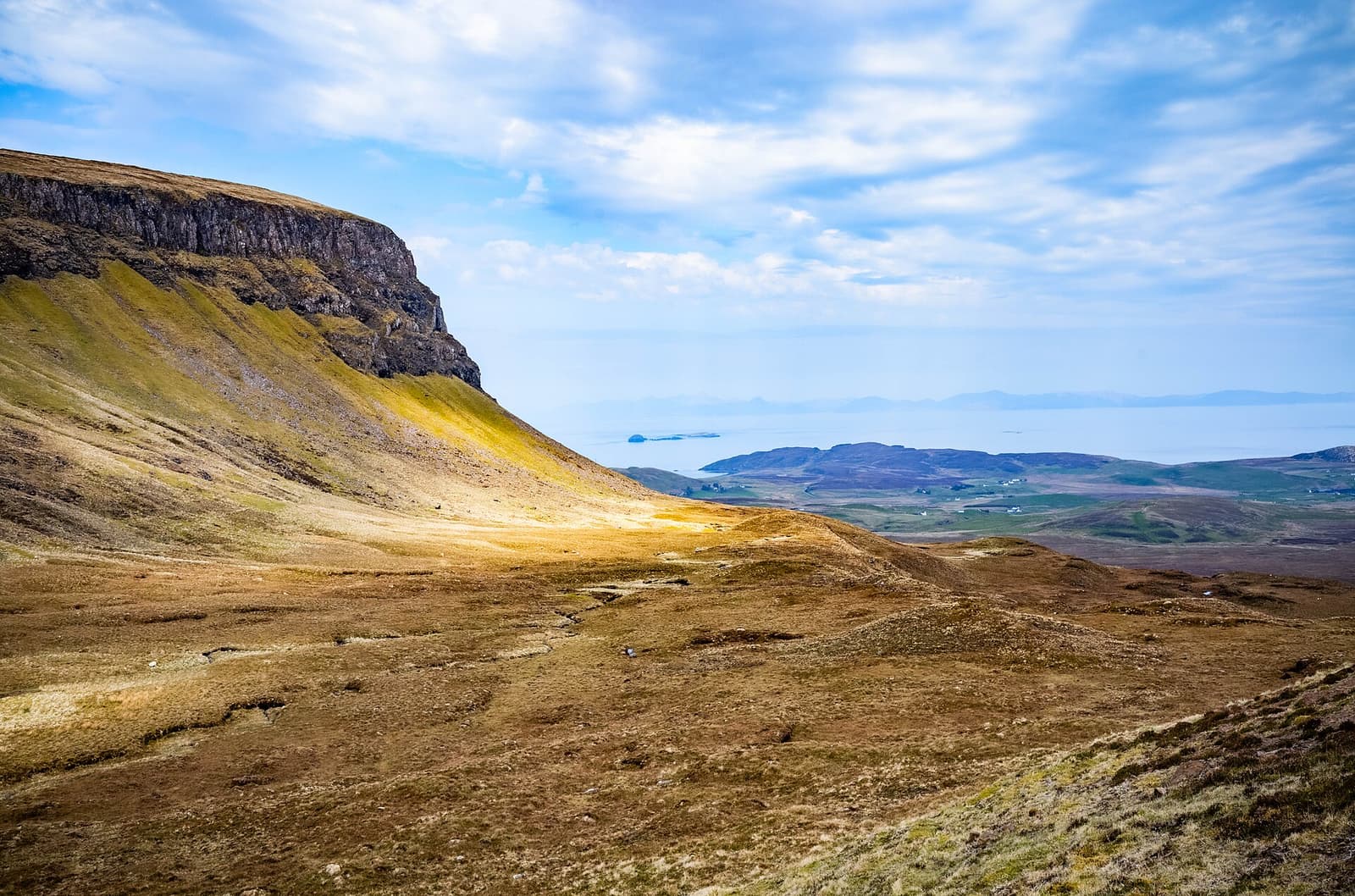
Scotland’s best scenery is strung along roads that were built for crofters and fish lorries, not for convoys of camper vans. That is their charm and their limit. A road trip here goes well if you drive less each day than you think you can, book beds ahead and learn how passing places work before you meet your first oncoming tractor.
The North Coast 500
The North Coast 500 (NC500) is a signed circuit of about 516 miles (830 km) around the northern Highlands, starting and finishing at Inverness. It was launched as a route in 2015 by joining up existing roads: west to Applecross and Torridon, north through Ullapool and Assynt to Durness, east along the top of the country to John o’ Groats, and back down the east coast through Wick, Dornoch and the Black Isle.
- How long: allow at least five days; seven is better, and many people take ten. Doing it in three or four turns it into a windscreen tour.
- Which way round: either. Most guides describe it anticlockwise from Inverness, to the west coast first. The west and north-west are the most dramatic stretches; the east coast is faster and gentler.
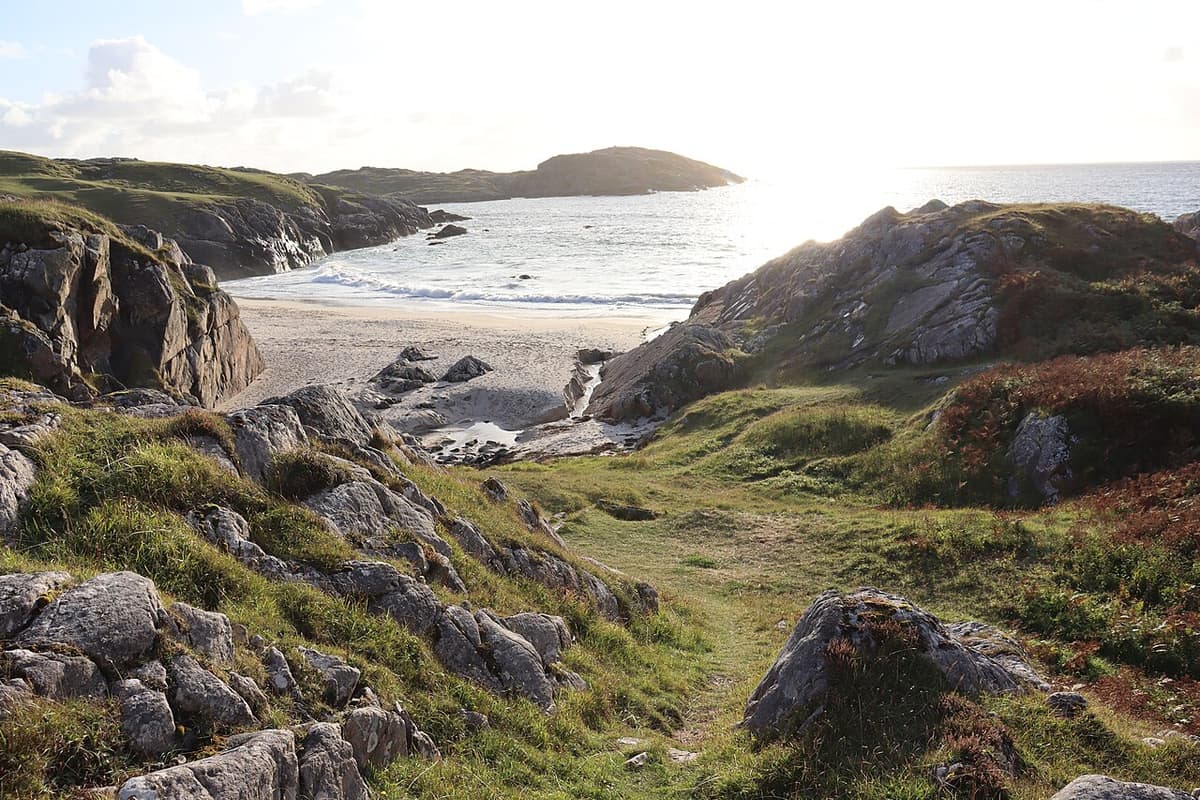
- Highlights: the hairpins of the Bealach na Bà to Applecross, Torridon’s mountains, the beaches at Achmelvich and Clachtoll, the Kylesku Bridge, Smoo Cave at Durness, Dunnet Head (the true northernmost point of mainland Britain), Dunrobin Castle.
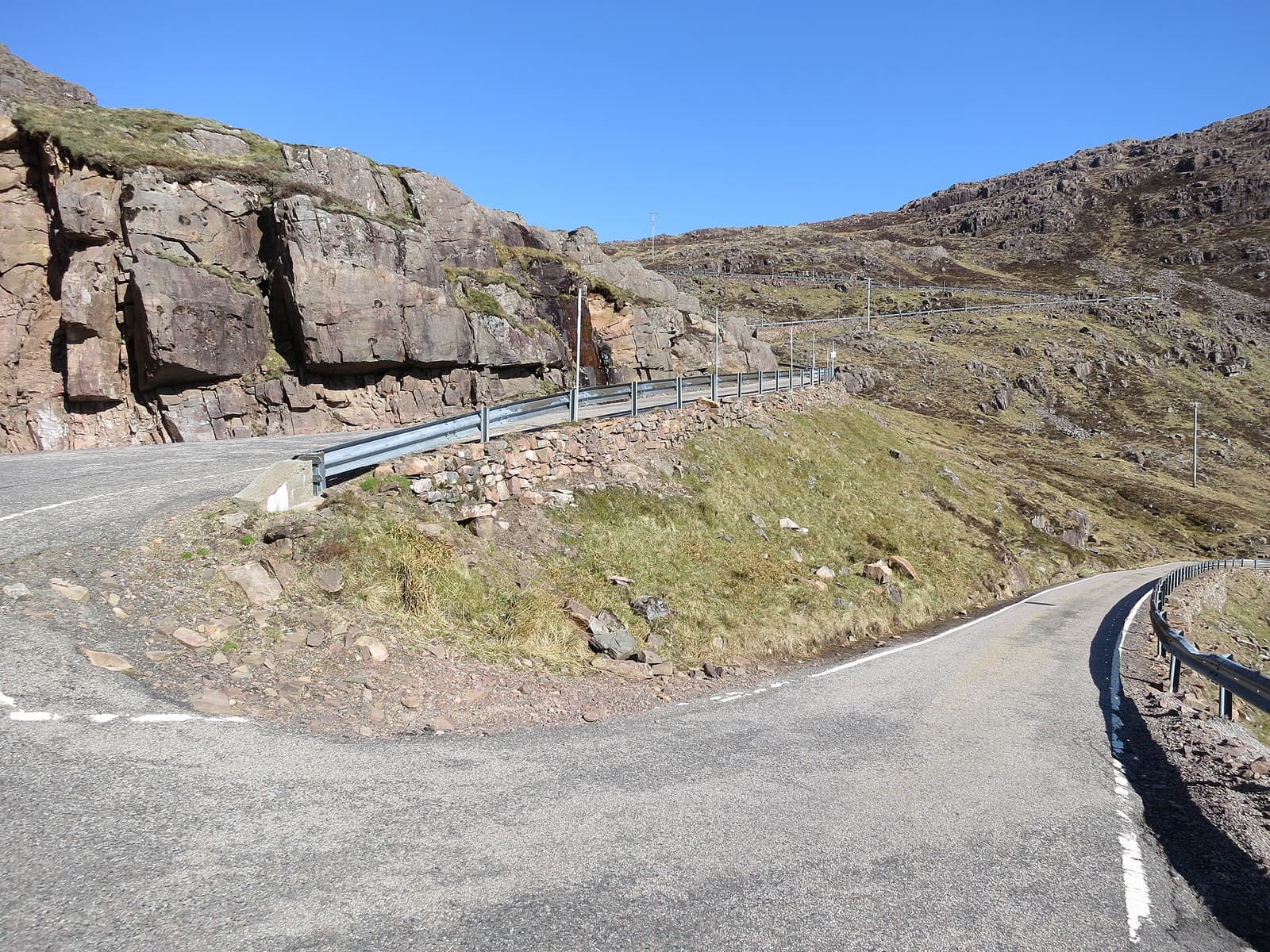
- The Bealach na Bà: a single-track mountain pass rising to about 626 m (2,054 ft) with gradients up to 1 in 5. It is not suitable for large motorhomes, caravans or nervous drivers, and can close in winter; there is an easier coastal alternative through Shieldaig.
The pressure points
The route’s success has strained places with a few hundred residents. In July and August accommodation and campsites are booked out months ahead, single-track sections clog, and communities have had real problems with litter, roadside toilet waste and vans parked overnight in passing places. None of this is a reason not to go; it is a reason to go thoughtfully:
- Book every night before you set off, or travel in May, early June or September.
- Use official campsites and waste-disposal points. The right to roam does not cover sleeping in a motor vehicle — see our travel guide.
- Fill the tank when you can: fuel is sparse in the north-west and some pumps are card-only and unattended.
- Shop and eat locally. Village shops and cafés are why these places still have people in them.
No car? Day tours from Inverness sample the east coast as far as John o’ Groats, and multi-day small-group tours cover the north and Orkney — see tours from Inverness.
Single-track roads and passing places
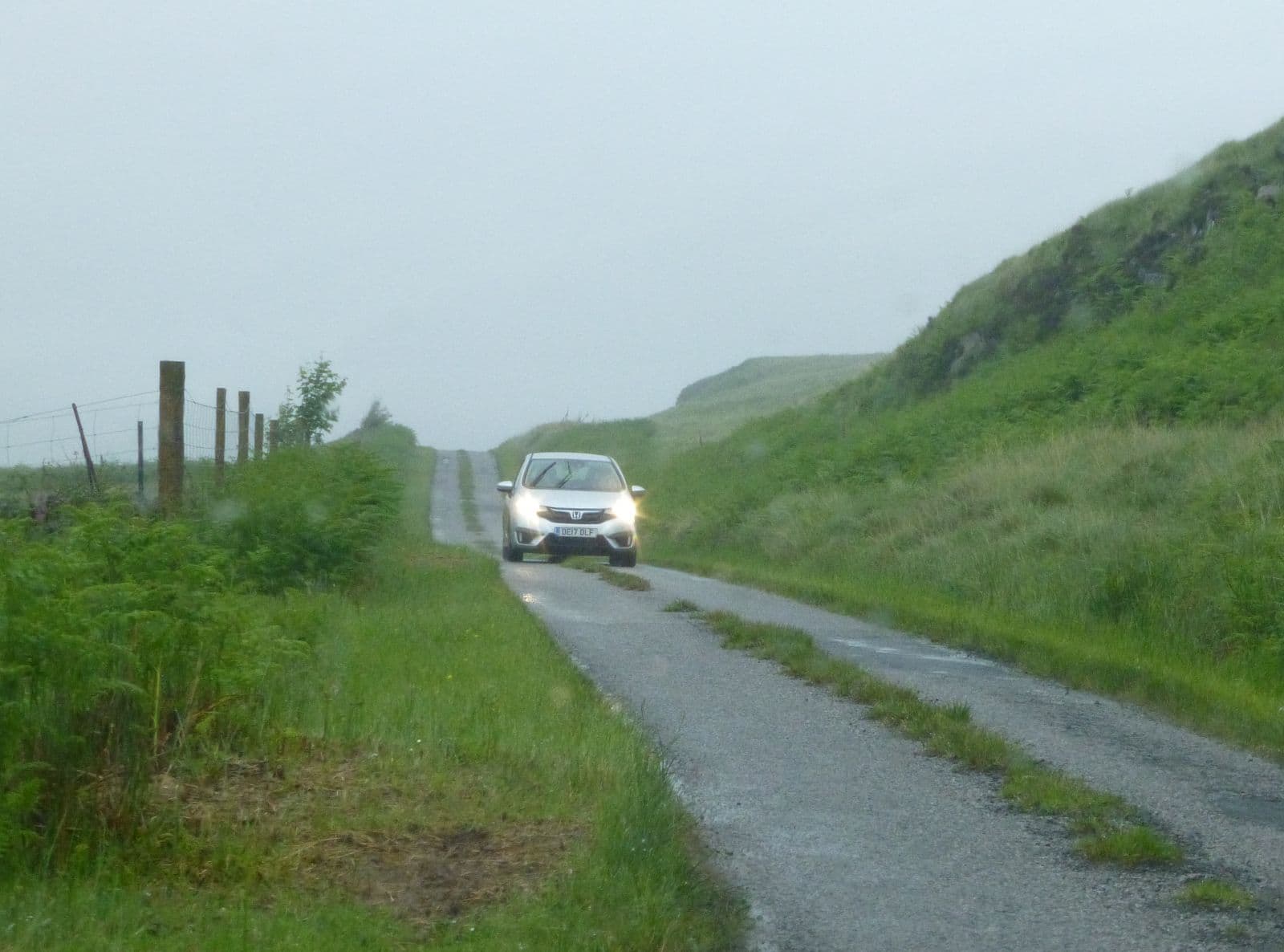
Much of the north-west and nearly all island roads are single track: one lane for both directions, with passing places marked by white diamond or square signs or black-and-white poles. The rules are simple and locals expect visitors to know them:
- When a vehicle comes towards you, the one nearer a passing place pulls in — into a passing place on your left, or stops opposite one on your right so the other driver can use it. Never cross to the right-hand side into a passing place.
- If a vehicle is behind you and wants to go faster, pull into a passing place and let it past. This is the single most appreciated thing a visitor can do: the car behind may be a doctor, a vet or someone late for the ferry.
- Never park in a passing place, not even “just for a photo”.
- Acknowledge the other driver with a raised hand. Everybody does.
- Give way to vehicles coming uphill where you can, and expect sheep, deer and cattle on the road, especially at dusk.
- Watch the verges: soft edges can swallow a wheel.
Driving on the left
Traffic drives on the left throughout the UK. If that is new to you, an automatic car removes one thing to think about; reserve one early because they are a minority of the hire fleet. Roundabouts are taken clockwise, giving way to traffic from the right. Speed limits are in miles per hour: generally 30 mph (often 20 mph) in built-up areas, 60 mph on single-carriageway roads and 70 mph on dual carriageways and motorways unless signs say otherwise — though on a twisting Highland road 60 is a limit, not a target. Scotland’s drink-drive limit is lower than in the rest of the UK; in practice, if you are driving, do not drink.
Other routes worth the fuel
| Route | Roughly | What it is |
|---|---|---|
| Argyll Coastal Route | 129 miles (208 km) | Loch Lomond to Fort William by Inveraray, Oban and Glencoe: sea lochs, seafood and castles. A fine two-day alternative to the direct road. |
| Snow Roads | 90 miles (145 km) | Blairgowrie to Grantown-on-Spey over the highest public roads in Britain, through the eastern Cairngorms, Braemar and Tomintoul. |
| North East 250 | 250 miles (400 km) | A circuit of Speyside, the Moray Firth coast, Aberdeen and Royal Deeside: distilleries, fishing villages and castles, with far less traffic than the NC500. |
| South West Coastal 300 | 300 miles (480 km) | Dumfries and Galloway and south Ayrshire: quiet coast, forests and dark skies, well off the usual tourist line. |
| Road to the Isles | 46 miles (74 km) | Fort William to Mallaig past the Glenfinnan Viaduct and the white sands of Morar, ending at the Skye ferry. |
| The Hebridean Way | about 185 miles (300 km) | The length of the Outer Hebrides from Vatersay to Lewis across causeways and two ferries. |
Distances are approximate. For how the drives fit into a whole trip, see our itineraries.
Motorhomes and camper vans
Scotland is a wonderful place for a camper van and a difficult one for a large motorhome. If you are hiring, choose the smallest vehicle you can live in. Plan overnight stops at campsites or the growing number of community-run stopovers with waste facilities, never empty toilets or grey water anywhere but an official point, and stay off single-track roads that are signed as unsuitable. In the islands, book your ferry space at the vehicle’s true length.